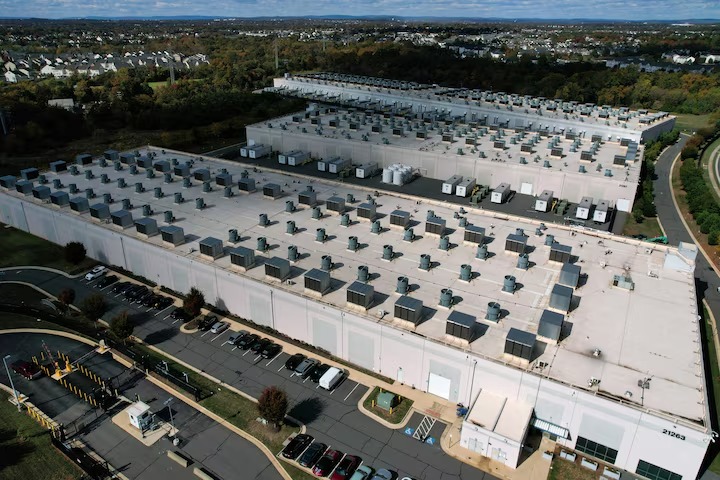
Financing the Digital Expansion
The rapid build-out of AI infrastructure and data centres is generating headline-making deals, yet behind the glamour lies a web of complex financing that could test global markets.
Recent months have seen a surge in investment-grade debt issued by large tech and infrastructure players, while corporate borrowing, high-yield bonds, private credit, and asset-backed securities (ABS) highlight shifting risk dynamics across the data-centre financing ecosystem.
Investment-grade issuance linked to AI-focused businesses more than doubled in a recent two-month period, led by major players such as Meta, Oracle, and Microsoft.
Meanwhile, mid-tier and emerging tech companies are turning to high-yield bonds and private-credit funds, pushing speculative debt into a fast-growing but illiquid asset class.
Analysts estimate that hundreds of billions of dollars will be required to sustain global AI data-centre expansion in the next few years.
These hybrid financing models — from structured debt instruments to private-credit loans and securitised assets — offer both scale and flexibility. Yet they also funnel capital into assets that are hard to trade, opaque, and sensitive to economic slowdowns.
Why It Matters for Regional Investors
For investors in the Gulf, Asia, and emerging markets, the AI infrastructure wave carries critical implications.
The build-out aligns with national tech diversification strategies, but the rise of complex funding vehicles demands greater scrutiny of asset quality, transparency, and liquidity.
In geopolitically exposed regions — where capital crosses borders and regulatory regimes differ — data-centre debt could become a stress point if interest rates rise, demand cools, or policy frameworks shift.
Identifying financial hot spots and credit risks early will be key to preventing market surprises.
Looking Ahead: Growth with Structural Risks
The top-line story remains one of explosive growth.
AI-driven demand is accelerating global digital infrastructure investment, from hyperscale data centres to semiconductor supply chains.
However, the underlying debt structures are becoming layered, speculative, and dependent on continuous cash-flow growth.
In a cooling economic cycle, debt servicing could strain balance sheets, especially for firms exposed to long-term build-operate-transfer (BOT) or asset-backed financing models.
To stay resilient, institutional investors and wealth managers should:
- Diversify funding exposure across regions and instruments.
- Conduct in-depth due diligence on counterparties and debt issuers.
- Focus on credit discipline and exit planning before deploying capital.
Business X Insight
In the era of AI, infrastructure is more than performance — it’s paid for by debt.
For investors, the smartest move is to align innovation with risk management.
When a sector explodes in size, it also explodes in complexity — and only those with structured strategies will thrive